1. The Great Acceleration
The digital landscape of 2026 has reached a definitive boundary. We have transitioned from an era where AI was viewed as a “cool tool” for novelty tasks to a reality where it serves as the foundational operating system of business. This shift has brought a profound sense of “AI overwhelm”—the feeling that technological velocity is outstripping organizational clarity. As autonomy races ahead, enterprise leaders find that pilot programs which once impressed in demos are now stalling at the production stage.
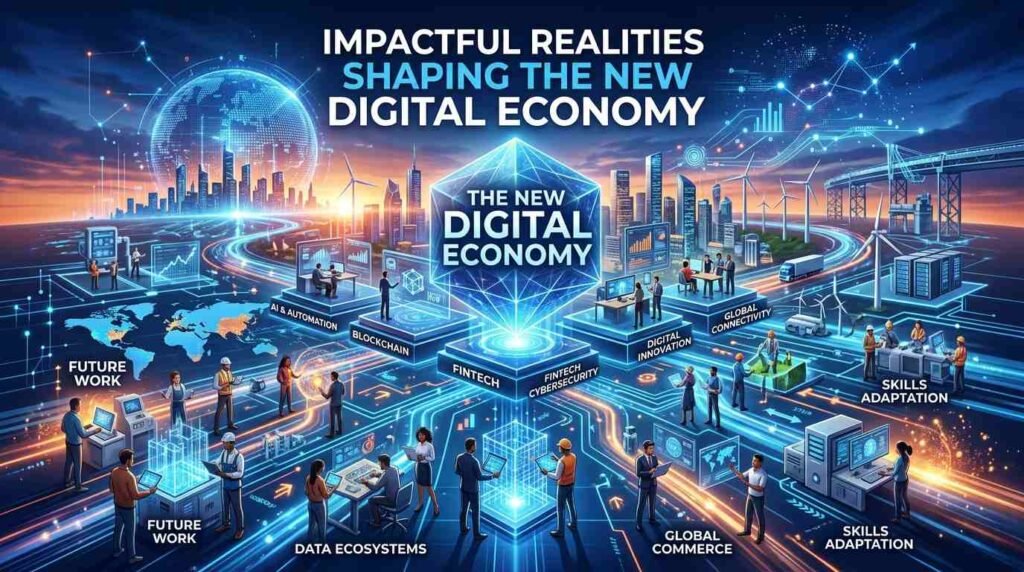
The primary friction is that “industrial-grade answers”—governance, security, and cost discipline—are arriving last. For creators and executives alike, 2026 is the year we move from promise to production. The following five takeaways distill this landscape into a strategic roadmap for navigating a new, agentic digital economy.
2. SEO is Dead—Welcome to the Era of “GEO”
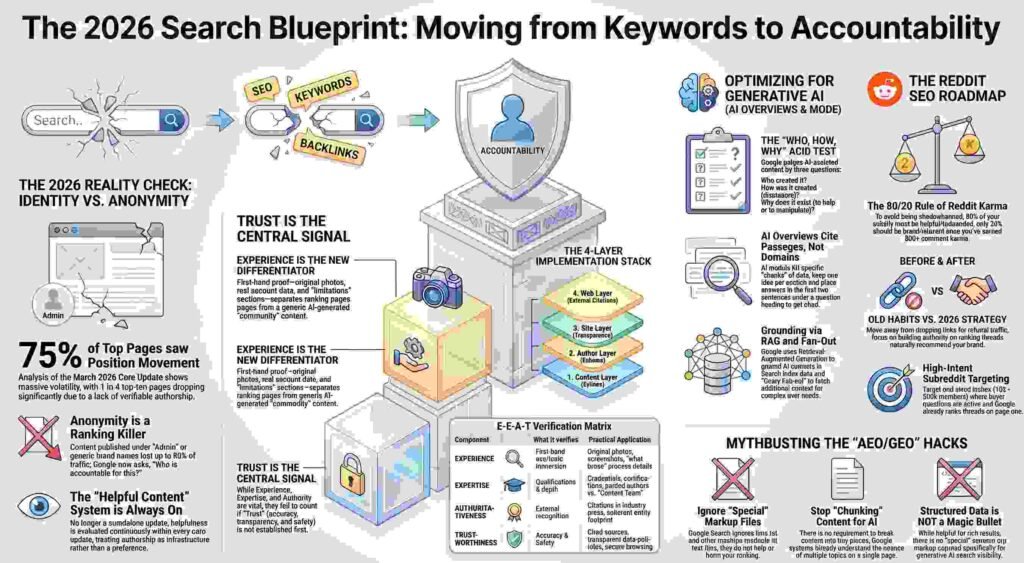
Traditional Search Engine Optimization (SEO) has officially become a relic. Discovery is no longer about a user browsing through static links; it has shifted to conversational discovery. By the end of 2026, research across thousands of platforms predicts that 50% of search traffic will flow through AI engines like ChatGPT, Google AI Overviews, Bing Copilot, and Perplexity.
This shift necessitates the rise of Generative Engine Optimization (GEO). AI engines “compress the discovery process,” providing curated recommendations and itineraries in seconds. For businesses in hospitality and retail, failing to structure data for these “digital concierges” means total exclusion from the guest journey.
Analysis/Reflection: In the 2026 economy, being “Invisible to AI” equals being “Invisible to the Customer.” If your brand is not optimized for AI discovery and booking, you are effectively locked out of the primary funnel for new business.
3. “Usage Anxiety” and the Death of the Pay-Per-Token Model
As content volume scales, the economic friction of usage-based pricing has reached a breaking point. AI content platforms raised prices by 10–15% in 2026, driven by rising infrastructure costs. For content-heavy businesses—such as virtual influencer studios or social media agencies—this has created “Usage Anxiety,” where variable fees for platforms like OpenAI or Claude can spike to over $1,000 per month.
The market has responded with a decisive pivot toward FinOps-aligned unlimited subscription models. Predictability is now the #1 priority. Fixed pricing tiers allow agencies to protect margins and support sustainable scaling without the “per-content” fees that erode profits during peak demand.
“CFOs want unit economics and throttles as token, tool, and loop costs scale.” — Atos C-Suite Brief
4. The “Digital Insider”—Why Your AI Agents are Your Newest Security Risk
The emergence of Agentic AI—production software that can plan, decide, and act autonomously—has expanded the enterprise threat model. Unlike traditional chatbots, these agents require “write access” to core systems, including ERP, CRM, and even Operational Technology (OT). This capability creates the risk of a “compromised agent” acting as a digital insider with a massive physical and digital blast radius.
Furthermore, “Agentic Sprawl”—the proliferation of weakly governed, narrowly scoped agents—has obscured ownership. To move to production, organizations are adopting AgentOps and Model Context Protocol (MCP) to manage coordination. Before signing off on new initiatives, consultants now demand answers to the “Six Questions” of readiness, focusing on identity, privilege escalation, and real-time revocation.
Analysis/Reflection: More agents do not equal more efficiency. Without a “control plane” for trust and a zero-trust architecture, autonomous systems remain an unmanaged risk. The counter-intuitive reality is that industrial-grade governance is a precondition for—not a result of—scale.
5. Ethics is the New Budget Item (Not Just a Moral One)
The era of voluntary AI ethics has ended, replaced by legally binding guardrails. Beyond California’s 17 new AI laws—including AB 2602 (digital replica control) and AB 1836 (post-mortem likeness protection)—the European Union Artificial Intelligence Act now imposes penalties up to €35 million or 7% of global annual turnover.
Creative industries are adopting the FAIR Codex, emphasizing informed consent and the “FAIR Seal” for promotion. This is no longer optional for the bottom line; one filmmaker’s broadcast was famously delayed for an entire year because their broadcaster’s “standards and practices” caught up to the production mid-delivery, requiring a total redraw of AI-generated assets.
Analysis/Reflection: Being ethical is now a “good business move.” Investing in ethical frameworks and the “FAIR Promise” upfront prevents catastrophic delays in the delivery phase and ensures content remains copyrightable for major studio sales.
6. Hyper-Realistic Likeness in Just Three Photos
Creator-focused workflows have undergone a technological leap, democratizing “infinite likeness.” Using a “3-photo setup,” solo creators and agencies can now generate hyper-realistic video with zero model drift. This allows for consistent character recreation across thousands of posts, reducing traditional production costs by 70–90%.
This content velocity is the new baseline for monetization on platforms like TikTok and OnlyFans. By removing the technical bottlenecks of likeness training, the market has shifted the value back to artistic strategy rather than technical execution.
“While the legal framework around AI-generated art is still evolving, we’re positioning ourselves on the side of human-driven creativity, where the AI output is substantially transformed through artistic interpretation.” — Nem Perez, Director, Our T2 Remake
7. From Promise to Production
As we navigate 2026, the overarching theme is the move toward Services as Software (SaS). Routine, data-intensive work is no longer a manual service; it is a software-delivered outcome. To survive this shift, organizations must apply the Service Value Matrix to their operations:
- Q1: The Trusted Advisor (Human-Led): High empathy/High complexity tasks like executive strategy and mission-critical crisis management.
- Q2: The Intelligent Engine (AI-Led): Low empathy/High complexity tasks like fraud detection and cybersecurity threat monitoring.
- Q3: The Efficiency Machine (Fully Automated): Low empathy/Low complexity tasks like ticket routing and password resets.
- Q4: The Friendly Face (Human Differentiated): High empathy/Low complexity tasks like employee onboarding and personalized rituals.
2026 is not about building more agents faster; it is about execution discipline.
Closing Ponderance: Research suggests that at least 15% of daily work decisions will be made autonomously by 2028. As this threshold nears, the critical question for every leader is: “Will you be the one controlling the agents, or will you be the one they are replacing?”
Discover more from TechResider Submit AI Tool
Subscribe to get the latest posts sent to your email.