
1. The Death of the Chatbot Distraction
The current corporate obsession with AI chatbots is a distraction. While your competitors are fine-tuning prompts to get better text summaries, the vanguard is preparing for a total inversion of the data hierarchy. By 2026, the “Chat” era will be viewed as the prehistoric phase of generative AI.
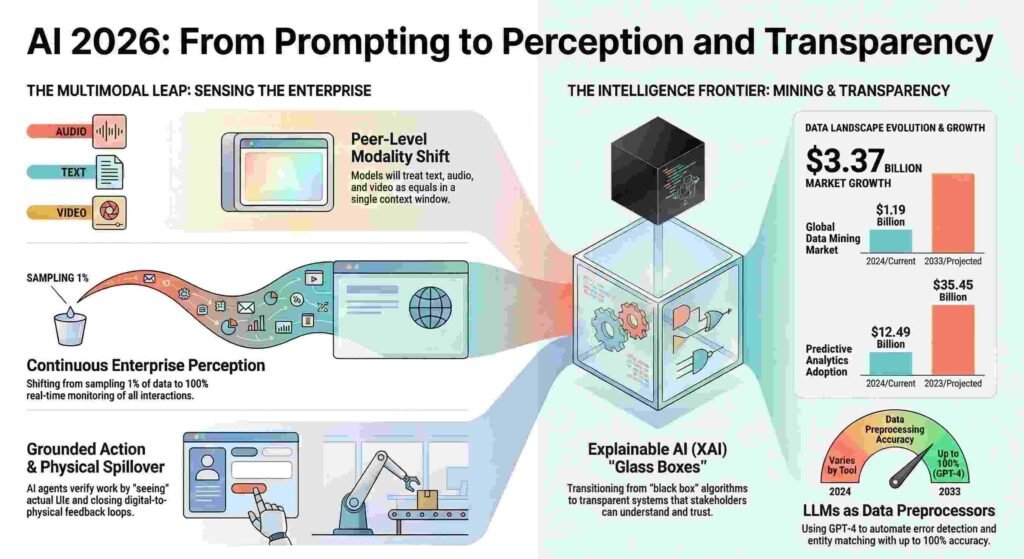
The real problem isn’t that we lack data; it’s that 80% of enterprise value is trapped in “messy” formats—recorded sales calls, grainy CCTV feeds, and screenshots of janky legacy ERP systems that traditional, text-centric AI simply cannot interpret. The shift now underway is from reactive chat to continuous perception. Winners in 2026 will not be those with the flashiest demos, but those who have successfully re-engineered their operations to ingest and reason over the world as it actually exists, not just as it is transcribed.
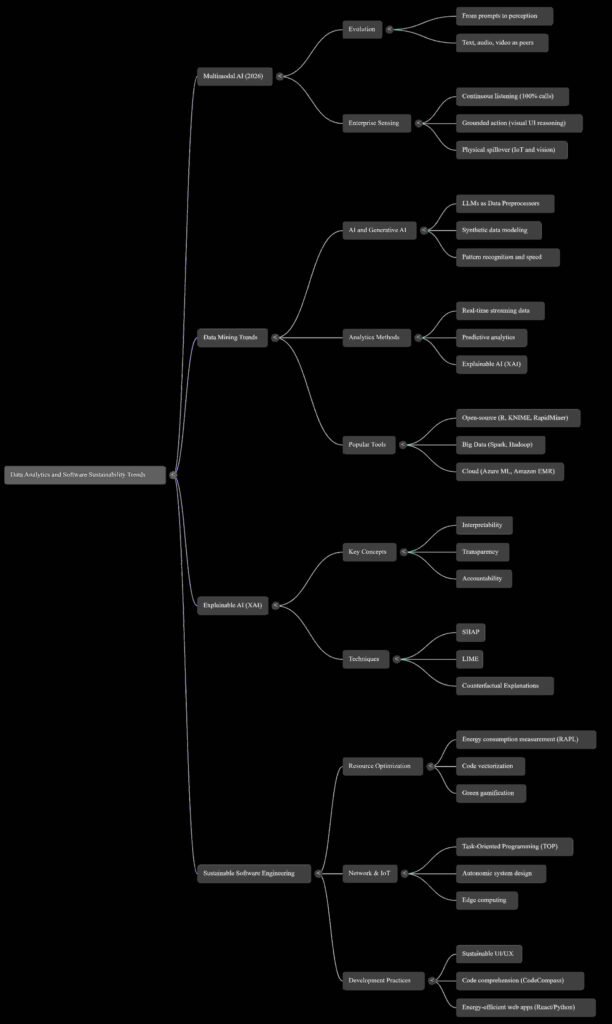
2. From Prompts to Perception: The Multimodal Inversion
Most executives still treat language as the primary AI interface, with images or audio as “attachments.” By 2026, that hierarchy inverts. Leading systems will treat text, audio, video, and logs as peers in a single context window. This is the “Multimodal Leap,” and it changes AI from a tool you talk to into a system that “senses” your business.
This allows organizations to capture “latent signals”—the subtle shift in a customer’s tone before they churn, or the recurring, undocumented workarounds a representative performs in a legacy tool. This is the bridge to “Grounded Action,” where AI agents don’t just guess based on text instructions; they see the actual UI, the actual report, and the actual error trace to check their own work.
“In 2026, we’ll see AI that can watch a video and answer detailed questions about tone and context, reason over mixed modalities, and auto-generate workflows across tools.” — Aaron Bawcom, Invisible Technologies
3. The New Data Janitors: LLMs as Automators of the Messy Middle
Strategic model selection is now more important than raw compute. While recent arXiv research confirms that LLMs are revolutionizing data preprocessing, not all models are created equal. GPT-4 has emerged as a powerhouse, achieving 100% accuracy on several data cleaning datasets, effectively replacing specialized, custom-coded legacy systems like HoloClean or Magellan.
However, a strategist’s warning: GPT-4o performed mediocrely on error detection and schema matching compared to its predecessor. Blindly upgrading to the “newest” model is a rookie mistake. Furthermore, the implementation of Batch Prompting is no longer optional for the cost-conscious enterprise. Moving from single-instance processing to batches of 15 can slash costs from $8.14 to $2.99 and reduce processing time from 4.8 hours to just 1.6 hours.
| Preprocessing Task | Enterprise Application | Competitive Advantage |
| Error Detection (ED) | Identifying discrepancies in records. | Shift from manual QA to automated, near-perfect record integrity. |
| Data Imputation (DI) | Inferring missing values (e.g., city names). | Reclaims “lost” data for analytics without manual research. |
| Schema Matching (SM) | Aligning attributes from disparate sources. | Dramatically accelerates M&A data integration. |
| Entity Matching (EM) | Identifying duplicate records across sets. | Replaces programming-heavy tools with flexible natural language. |
4. The Rise of the “Glass Box”: XAI as a Business Imperative
The “Black Box” is a board-level liability. As AI moves into high-stakes decision-making, the transition to Explainable AI (XAI) or “Glass Box” systems is a regulatory and operational requirement. Transparency is no longer a “nice-to-have” feature; it is the difference between an asset and a GDPR violation.
Using tools like SHAP (SHapley Additive exPlanations) and LIME, enterprises can now demystify complex model outputs. This isn’t just about compliance—it’s about performance. JP Morgan Chase, for instance, leveraged XAI to reduce fraudulent transactions by 40% by understanding the “why” behind the “what.”
The Strategist’s Take: XAI is the bridge between technical complexity and stakeholder trust. In an era of high-stakes automation, an unexplainable model is an unmanageable risk.
5. Physical Spillover: Closing the Loop
By 2026, AI capability will no longer be confined to digital screens. Multimodal stacks are enabling “physical spillover,” where digital workflows and physical reality are linked through a continuous feedback loop. This closes the gap between what is happening on the warehouse floor and what is reflected in the ERP.
- Continuous Perception: Systems monitor 100% of factory feeds to flag safety issues or process deviations in real-time.
- Inventory Automation: Vision systems count stock and reconcile it with backend systems without human intervention, reducing waste and increasing operational speed.
6. Synthetic Realities: Solving the “Small Data” Problem
The biggest barrier to entry for medium-sized enterprises (SMEs) has been the lack of massive, historical datasets. Generative AI is leveling the playing field through synthetic data modeling. By simulating rare scenarios—such as specific fraud patterns or supply chain anomalies—SMEs can train high-accuracy models without decades of data.
This shift is a primary driver behind the predictive analytics market, which is projected to reach $35.45 billion by 2027. Organizations are no longer limited by what has happened; they are empowered by what could happen.
7. Conclusion: The Competitive Frontier of 2026
The primary trap of the next 24 months is treating multimodal AI and XAI as simple checkboxes in an RFP. True competitive advantage belongs to the leaders who recognize that these tools require a complete redesign of operations.
This high-transparency future brings uncomfortable tensions regarding privacy, governance, and the role of human labor. As AI begins to see and hear everything within your organization, the technical hurdles will fall, leaving only the strategic ones.
In a world where AI can sense every undocumented workaround and hear every tone of voice, you must ask yourself: “What becomes our most valuable human-led advantage when the ‘Black Box’ of our operations is finally made of glass?”
Discover more from TechResider Submit AI Tool
Subscribe to get the latest posts sent to your email.
