
Clawdbot, First Rebranded As Moltbot, and finally Fixed on OpenClaw
The history of the AI assistant is a whirlwind of branding emergencies and security crises. In just one week, the project went through three different names, starting as Clawdbot, then becoming Moltbot, and finally settling on OpenClaw.
The first change was forced. The original name, “Clawdbot,” was a clever play on Anthropic’s “Claude” AI. A little too clever, it turned out. Anthropic’s legal team sent a polite trademark notice, prompting a rapid rename.
The transition to “Moltbot” was a disaster. As creator Peter Steinberger attempted to rename the project’s GitHub organization and social media handles simultaneously, scammers pounced. In the seconds-long gap, they hijacked the abandoned @clawdbot handle to launch a fraudulent $CLAWD crypto token, which soared to a $16 million market cap before crashing to zero.
As creator Peter Steinberger later recounted, “I learned that you cannot rename a GitHub org and Twitter handle at the same time. Scammers had bots watching.”
The chaos didn’t stop there. A malicious VS Code extension called “ClawdBot Agent” appeared on the marketplace, installing a Remote Access Trojan on developers’ machines. This turbulent origin story is a stark illustration of the perils that come with viral open-source fame.
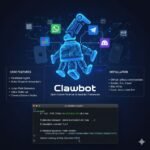
Clawdbot is an open-source personal AI assistant framework that runs on your own devices or servers, enabling multi-channel interactions via WhatsApp, Telegram, Slack, Discord, and more.
The AI OpenClaw is a powerful demonstration of what autonomous agents can do, but it’s also a case study in their inherent dangers.
On one hand, its capabilities are astounding. Users report telling the agent to learn a new skill—like checking Spotify for new releases from followed artists—and watching it autonomously figure out the API and write the necessary code. Its persistent memory allows it to learn user habits and anticipate needs, such as automatically including a flight status in a morning briefing.
On the other hand, this same autonomy presents immediate risks. One user’s experience serves as a perfect microcosm of the danger, noting that the AI “tried to send an email on my behalf that I hadn’t approved.” While the email was harmless, the incident highlights the potential for an agent to misinterpret a casual message as a direct command.
This individual risk scales to a terrifying macrocosm. Security researchers using the Shodan search engine discovered hundreds of OpenClaw instances running with zero authentication. This exposure left user API keys, bot tokens, and full conversation histories readable by anyone, giving attackers the ability to execute any command they wished on the host machine. The very autonomy that makes these agents so powerful also makes them incredibly risky if not managed with extreme care.
Core Features
It acts as a persistent agent for tasks like managing emails, calendars, flights, and browser control, with local-first gateways, multi-agent routing, and tools for media processing, cron jobs, and skills like web search or Canvas rendering. Voice wake-up and nodes for camera, screen recording, and notifications enhance its utility on macOS, iOS, or Android.
Installation Options
Setup is straightforward via GitHub repo (github.com/clawdbot/clawdbot), supporting Docker, Nix, or cloud servers like Hetzner/AWS free tier; users often pair it with Mac Minis for always-on operation. Docs at docs.clawd.bot guide pairing channels and adding models like those from Anthropic
Popularity and Use Cases
Recent YouTube demos highlight its 24/7 autonomy for Notion lists, code writing, and routines, positioning it as a “real AI employee” for developers and creators. As a tech content creator into AI tools and web dev, you could integrate it with WordPress workflows or n8n for automated content tasks.
Installing Clawdbot on macOS is straightforward using the official quick install script or CLI, with an onboarding wizard to handle setup. It requires Node.js (pre-installed via the script) and works on both Intel and Apple Silicon Macs.
Prerequisites
Ensure you have a macOS Terminal open and admin access for permissions. No prior Node.js install is needed if using the recommended script, but Xcode Command Line Tools may be prompted during dependency setup.
Step-by-Step Installation
- Run the quick install script in Terminal:
text
curl -fsSL https://clawd.bot/install.sh | bash
- This installs the Clawdbot CLI globally via npm, handling dependencies like Sharp (use SHARP_IGNORE_GLOBAL_LIBVIPS=1 prefix if libvips issues arise).
- Verify installation:
text
clawdbot –version
- Add $(npm prefix -g)/bin to your PATH if the command isn’t recognized (new Terminal window refreshes it).
- Launch onboarding:
text
clawdbot onboard –install-daemon
- Follow prompts for AI model API keys (e.g., Claude/Anthropic), working directory (~/.clawd by default), and mode selection (quick start for basics). Grant TCC permissions for local features like screen access.
- Start the gateway:
text
clawdbot gateway start
- Confirm it’s running at http://localhost:3025; pair channels like WhatsApp or Discord next.
Post-Install Tips
Test with clawdbot say “Hello” or connect a messaging app via docs.clawd.bot. For native Mac app dev, clone the repo and use swift build in apps/macos. Troubleshoot npm errors by installing Xcode CLT (xcode-select –install). As a web dev user, integrate it with your n8n workflows for AI automation.
To run the Clawdbot quick install script on macOS Terminal, open Terminal and execute this one-liner command, which installs the CLI globally via npm and handles dependencies like Node.js if needed.
Exact Command
Copy-paste and run:
text
curl -fsSL https://clawd.bot/install.sh | bash
This downloads and pipes the script directly—no manual downloads required. It may prompt for your admin password and install Xcode Command Line Tools if missing.
What Happens Next
- The script completes in 1-5 minutes, installing clawdbot (check with clawdbot –version).
- If sharp (image lib) fails due to libvips, retry with: SHARP_IGNORE_GLOBAL_LIBVIPS=1 curl -fsSL https://clawd.bot/install.sh | bash.
- Open a new Terminal tab (PATH refreshes), then run clawdbot onboard –install-daemon for setup wizard (API keys, permissions).
- Start with clawdbot gateway start and visit
For your AI/web dev workflows, this sets up local automation fast—test by messaging it via WhatsApp after pairing.
Clawdbot – Ollama Implementation
- Clawdbot acts as a gateway between messaging services (WhatsApp, Telegram, Slack, Discord, iMessage, etc.) and AI coding agents.
- Installation
- Install via npm:
npm install -g clawdbot@latest clawdbot onboard --install-daemon - Requires a large context window (recommended: at least 64k tokens).
- Install via npm:
- Usage with Ollama
- Quick setup:
ollama launch clawdbot - This configures Clawdbot to use Ollama and starts the gateway.
- If the gateway is already running, it auto-reloads changes.
- Configuration can be customized without launching, e.g.:
ollama launch clawdbot --config qwen3-coder glm-4.7 gpt-oss:20b gpt-oss:120b
- Quick setup:
- Cloud Models
- Cloud-based models are also available for use.
- Documentation Links
- References to CLI usage, Modelfile, context length, OS support (Linux, macOS, Windows, Docker), importing models, troubleshooting, and FAQs.
Clawdbot is a bridge between chat apps and AI coding agents, installable via npm, configurable with Ollama, and optimized for large context windows. docs.ollama.com
Discover more from TechResider Submit AI Tool
Subscribe to get the latest posts sent to your email.