
1. Oil Slump & Market Rally Follow Historic US-Iran MoU
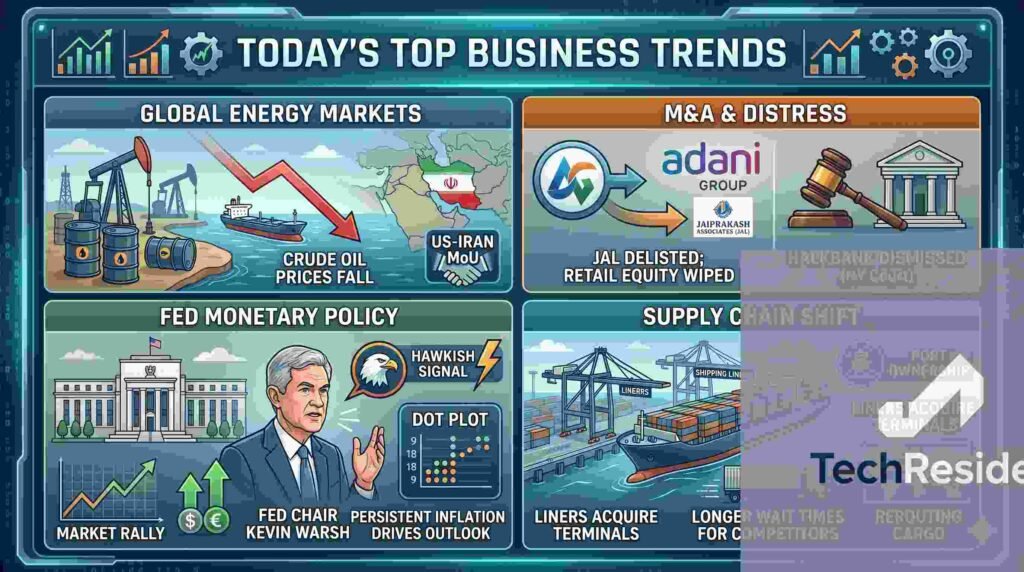
Global markets and energy sectors are reacting sharply to news that the US and Iran have signed a formal 14-point Memorandum of Understanding (the “Islamabad memorandum”) aimed at ending their conflict.
- The Impact: Crude oil prices plummeted immediately, with Brent crude dropping near $78 per barrel.
- Market Response: Easing geopolitical tensions and falling fuel costs have sparked a “risk-on” rally. While major US indices saw mixed pre-market activity, Indian equity benchmarks like the Sensex and Nifty rebounded sharply from early morning losses to trade well into the green.
2. Fed Chief Signals Hawkish Pivot
While geopolitical tensions are cooling, monetary policy tightening remains on the radar. The newly appointed US Federal Reserve Chair, Kevin Warsh, delivered a surprisingly hawkish tone following the central bank’s latest meeting.
- The Details: Driven by stubbornly persistent US inflation, the latest “dot plot” projections show an even split among central bankers, with 9 out of 18 predicting at least one more interest rate hike later in 2026. Warsh abstained from providing clear forward guidance, keeping Wall Street on high alert for tightening cycles later this year.
3. Corporate & M&A Shakeups
- Adani Group’s Takeover and JAL Delisting: In a major distress-to-acquisition story, shares of Indian conglomerate Jaiprakash Associates Ltd (JAL) are officially being delisted from the NSE and BSE today. Following the NCLT’s approval of the Adani Group’s ₹14,535-crore resolution bid, existing equity is being entirely wiped out—leaving roughly 6.5 lakh retail shareholders without compensation.
- Halkbank Case Dismissed: A massive 9-year legal saga has officially concluded. A US District Court in New York approved the joint request by the DOJ and Türkiye’s state-owned lender, Halkbank, to completely dismiss the criminal case against it.
4. Supply Chain Shift: Shipping Giants Buying Up Ports
A major structural trend is changing global logistics: massive container shipping liners are aggressively acquiring the actual physical terminals and ports they rely on. According to new data coming out of MIT, while independent terminal operators used to handle the heavy lifting, shipping carriers are taking control of their own infrastructure to protect themselves from supply chain bottlenecks. The side effect? Competitor shipping lines are experiencing significantly longer wait times, forcing an expensive rerouting of cargo.
Discover more from TechResider Submit AI Tool
Subscribe to get the latest posts sent to your email.