The Software as a Service (SaaS) landscape is undergoing its most radical transformation since the dawn of cloud computing. We have officially moved past the era of digital transformation and simple “cloud-first” migrations. The global SaaS market is hitting $465 billion, fueled entirely by architectural redesigns, autonomous operations, and new value-delivery mechanics.
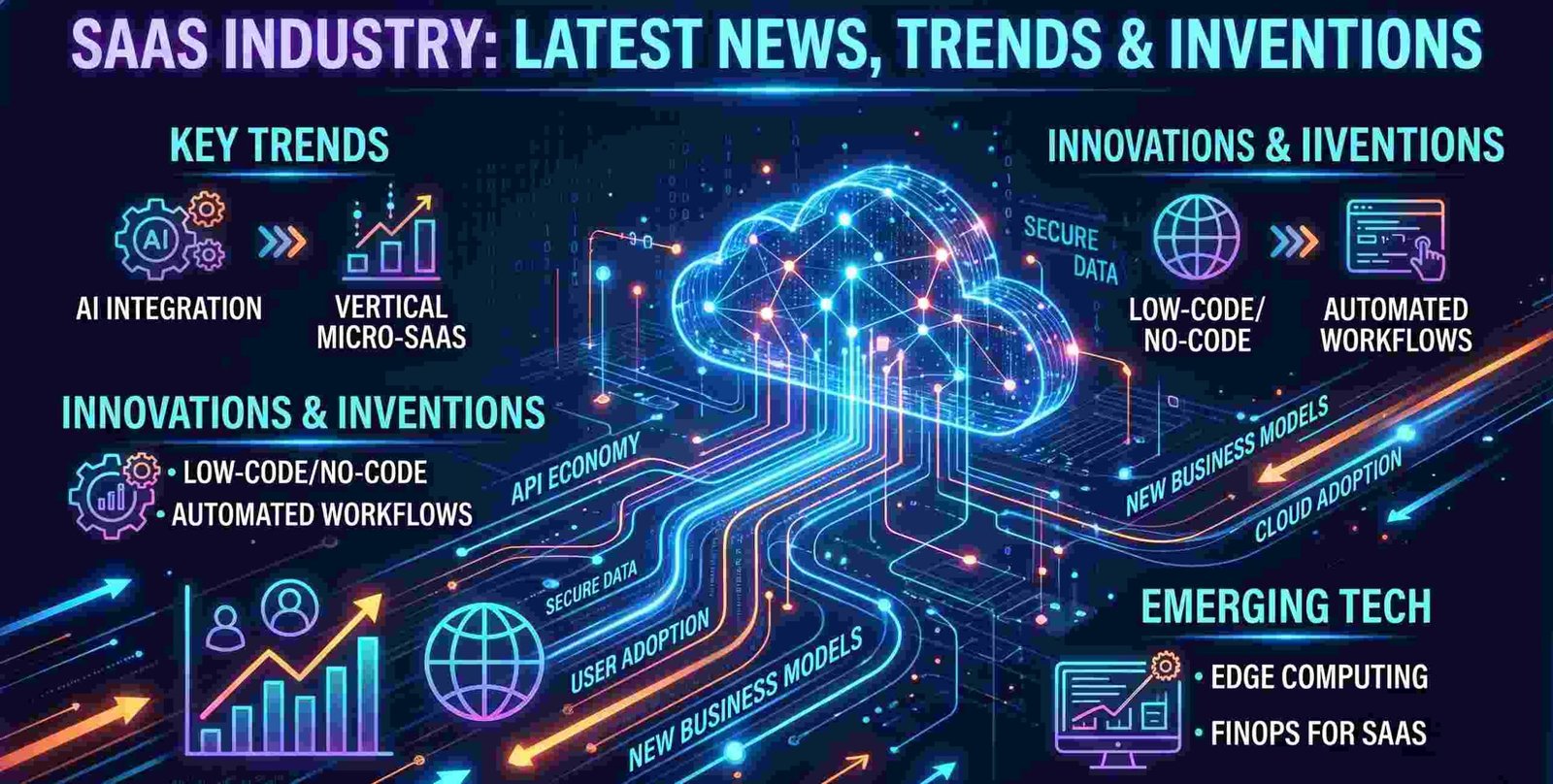
This comprehensive report breaks down the state of SaaS, exploring the foundational shifts, breakthrough inventions, and macro trends driving the market.
1. The Core Trend: The Shift from “Enabled” to “AI-Native”
For the past few years, SaaS companies slapped an AI chatbot into their existing user interface and called it innovation. That approach is dead. The primary trend is the architecture shift toward AI-Native SaaS and Agentic AI.
- Traditional SaaS: A system of record (e.g., standard CRMs or databases). Humans log in, input data, and click buttons.
- AI-Enabled SaaS: Traditional software with added-on AI features (e.g., text summarizing, smart search bar).
- AI-Native SaaS: Built from the ground up with computational intelligence as the core layer. These systems act as systems of execution, running continuously in the background, making automated decisions, and owning the actual business outcome rather than waiting for a human to trigger them.
Because of this, software is becoming less screen-dependent. Instead of spending hours navigating heavy dashboards, enterprise users interact with their tech stack via natural language workflows, multi-agent systems, and automated execution layers.
2. The Great SaaS Pricing Mutation
The traditional “per-seat” subscription model—the bedrock of SaaS economics for two decades—is crumbling under the weight of AI. Because AI agents can do the work of multiple human employees in seconds, charging per human login no longer aligns with the value delivered.
Furthermore, running large language models (LLMs) creates an “AI cost shock”—variable computational expenses that fixed subscriptions cannot cover.
| Pricing Model | How it Works | Market Adoption (2026) |
| Usage-Based (UBP) | Pay-per-API call, query, or data volume. | 60% of companies now use some form of UBP. |
| Hybrid Blended | A low base subscription fee + variable charges for AI computing. | 46% of SaaS vendors. |
| Outcome-Based | Customers only pay when a specific business metric or goal is achieved. | Emerging rapidly in customer support and sales tech. |
The Budget Volatility Trap: While token prices for AI models have dropped significantly, actual enterprise spending on AI consumption has grown by 320%. This massive volatility has made FinOps for SaaS a non-negotiable requirement for modern IT departments.
3. Industry Micro-Inventions & Niches
Innovation in SaaS has drastically narrowed its focus. Instead of building massive, generic, horizontal suites, the most successful new software inventions are targeting hyper-specific micro-gaps.
Autonomous Workflow Engines
Platforms like n8n and newer orchestration wrappers have evolved past basic automation. They function as AI execution control planes, decoupling fast-evolving AI models from permanent business logic, giving companies observability and control over what their AI agents are doing.
Vertical Micro-SaaS
Founders are building highly defensible businesses by automating heavy regulatory workflows in niche markets. Examples include localized AI content moderation for regional marketplaces, automated ESG (Environmental, Social, Governance) tracking for mid-sized manufacturers, and niche healthcare compliance software.
Low-Code Democracy
Gartner estimates that up to 80% of technology products are now built or customized by non-technical professionals. Internal no-code workflow builders allow employees to instantly map their unique company processes without overloading the core engineering team.
4. Bottlenecks: Shadow AI & The Trust Gap
The speed at which employees are adopting new SaaS software has completely outpaced corporate infrastructure, giving rise to two massive enterprise pain points:
- Shadow AI: Employees frequently paste proprietary corporate data into unsanctioned, external AI SaaS tools to speed up their tasks.
- The Governance Bottleneck: Enterprise buyers are ruthlessly scrutinizing data lineage, model transparency, and auditability. A platform must prove exactly how its automated decisions are made before an IT department will clear it.
Consequently, SaaS Security Posture Management (SSPM) tools are booming. Companies require software that can monitor cross-platform data prompts, enforce prompt policies, and mandate “human-in-the-loop” validation steps for high-risk autonomous actions.
5. Summary of Major Trends
- From Suites to Open Platforms: Customers are pushing back against rigid, expensive monolithic suites. The future belongs to API-first composable ecosystems where a company can easily swap point solutions in and out of a centralized core center of gravity.
- Answer Engine Optimization (AEO): SaaS marketing playbooks have fundamentally changed. Traditional SEO is losing efficiency; marketing teams now optimize their technical documentation, APIs, and case studies so that generative search engines (like Perplexity or Gemini) surface their software to buyers.
- Design Shift: UX design in SaaS is dropping heavy visual fluff in favor of interactive data visualizations, minimalist dashboard structures, and mobile-first responsiveness.
Discover more from TechResider Submit AI Tool
Subscribe to get the latest posts sent to your email.