Summary Quick-View
The Augmented Reality (AR) landscape has officially moved past experimental novelties. We have entered a high-growth era where digital overlays are blending seamlessly into daily utility, enterprise workflows, and mainstream consumer tech. Driven by hardware miniaturization and powerful AI integration, the AR market is experiencing a massive inflection point.

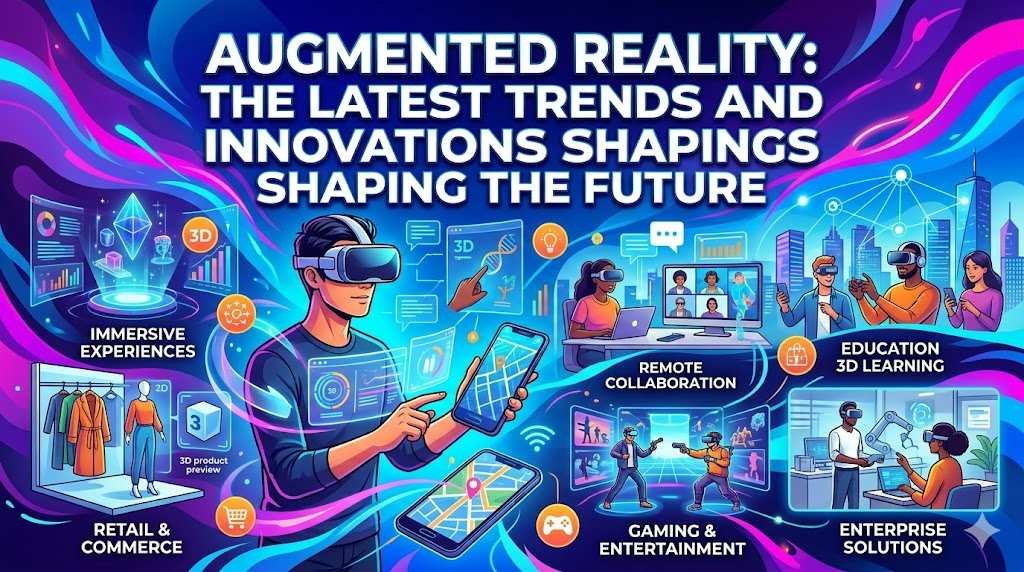
Here are the latest trending updates and major breakthroughs dominating the AR space right now.
1. Snap Defies Investors with Consumer ‘Specs’ Launch
In a bold move that has sent shockwaves through the tech industry, Snap co-founder Evan Spiegel just unveiled Specs—the company’s first fully standalone consumer AR glasses, priced at $2,195.
Defying pressure from activist investors to shut down its hardware division, Snap’s new wearable requires no tethered phone or external battery pack. Weighing just around 135 grams, Specs feature a 51-degree field of view, real-time hand-tracking powered by dual Snapdragon processors, and lenses that auto-tint in bright light. Snap is betting big that lightweight glasses, rather than bulky headsets, will become the primary digital interface of the next generation.
2. Google and Samsung Democratize ‘Android XR’
While premium headsets like Apple’s Vision Pro continue to capture the high-end creative market, the broader industry is looking toward standardization. Google and Samsung’s highly anticipated collaboration, Android XR, is rolling out to developers.
This ecosystem is designed to democratize spatial computing, lowering the barrier to entry for third-party hardware manufacturers. A standout early success showcased at recent industry expos is Google Maps XR: Immersive View. The app fuses standard 2D navigation data with photorealistic 3D environments, allowing users to step inside streets and buildings using just intuitive hand gestures and gaze tracking.
3. The Exploding “No-Display” Smart Glasses Market
Surprisingly, some of the fastest market growth isn’t happening in heavy visual overlays, but in no-display AR hardware. According to recent data from ABI Research, screenless smart glasses—which focus entirely on audio, ambient AI, and biometric tracking—now make up over 42% of global AR shipments.
Users are prioritizing all-day comfort and low costs over complex 3D visuals. These display-free glasses function as a subtle ambient layer, offering real-time translation, context-aware audio alerts, and seamless voice-assistant integration without causing visual fatigue.
4. Enterprise Powerhouse: From Warehouses to Healthcare
Beyond consumer gadgets, AR has become critical infrastructure for major industries:
- Industrial Metaverse: Over 75% of industrial companies utilizing large-scale AR and VR report at least a 10% increase in operational efficiency. Frontline workers use AR glasses for hands-free predictive maintenance, pulling up 3D schematics right over the machinery they are repairing.
- The Healthcare Jump: As the fastest-growing enterprise sector, healthcare professionals are leveraging AR to visualize 3D organ scans during diagnostics and complex surgeries, greatly reducing human error and improving patient outcomes.
5. Next-Gen Cellular Connectivity (5G/6G)
Historically, AR smart glasses operated primarily as smartphone companions reliant on Bluetooth or Wi-Fi. However, the current wave of hardware is introducing integrated cellular connectivity. Unlocking independent network access allows AR devices to fully transition into standalone platforms, providing always-on, real-time navigation and cloud-based AI processing anywhere you go.
Final Thoughts
We are watching the smartphone era slowly give way to the era of spatial computing. Whether it’s through premium, high-tech lenses like Snap’s Specs or the sleek simplicity of audio-first smart glasses, reality is officially being augmented on a mass scale.
Discover more from TechResider Submit AI Tool
Subscribe to get the latest posts sent to your email.