1. Introduction: The Death of the “Batch and Blast”
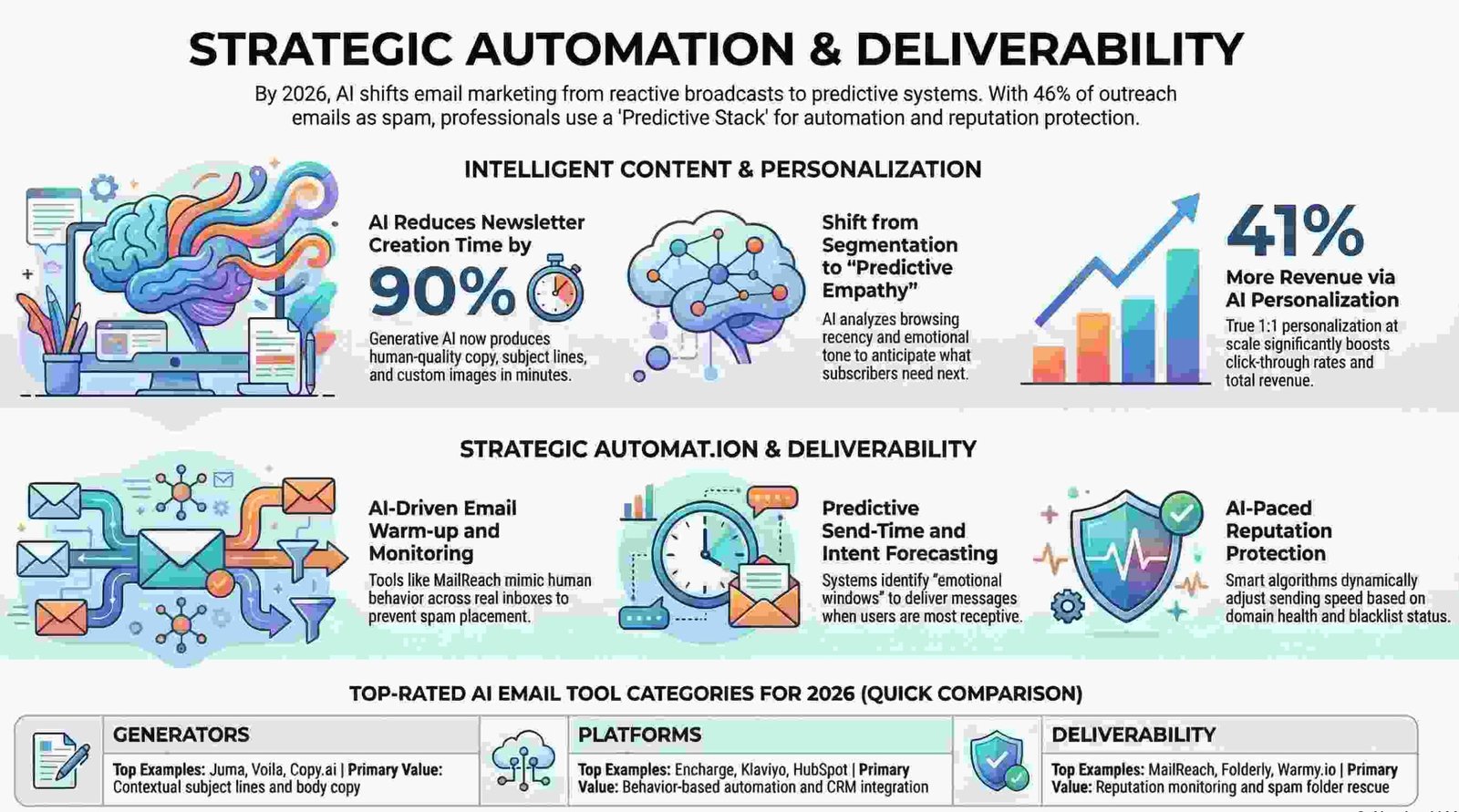
In the modern digital landscape, email has become a “digital hydra”—for every message you clear from your inbox, two more seem to rise in its place. For years, marketers fought this beast with high-volume “batch and blast” tactics, but the strategy has reached a breaking point. Data from current outreach benchmarks indicates that nearly 46% of sales and outreach emails end up in the spam folder, discarded before they are even seen.
The failure of the traditional model lies in its disregard for the recipient’s “emotional readiness.” By inundating users with irrelevant content, brands have contributed to a state of chronic cognitive load and decision fatigue. By 2026, the industry has reached a definitive turning point. The era of reactive, rule-based automation is over, replaced by a model of “predictive empathy.” The inbox is no longer a graveyard for broadcasts; it is a sophisticated interface for proactive relationship management.
2. From Segmentation to Sentience: The Rise of Anticipatory AI
The fundamental shift in 2026 is the move from “Traditional Email,” which relies on static segmented lists, to “Predictive AI Email.” While traditional systems react to what a user did—like a past click or an abandoned cart—modern AI employs intent forecasting to predict what a user will do.
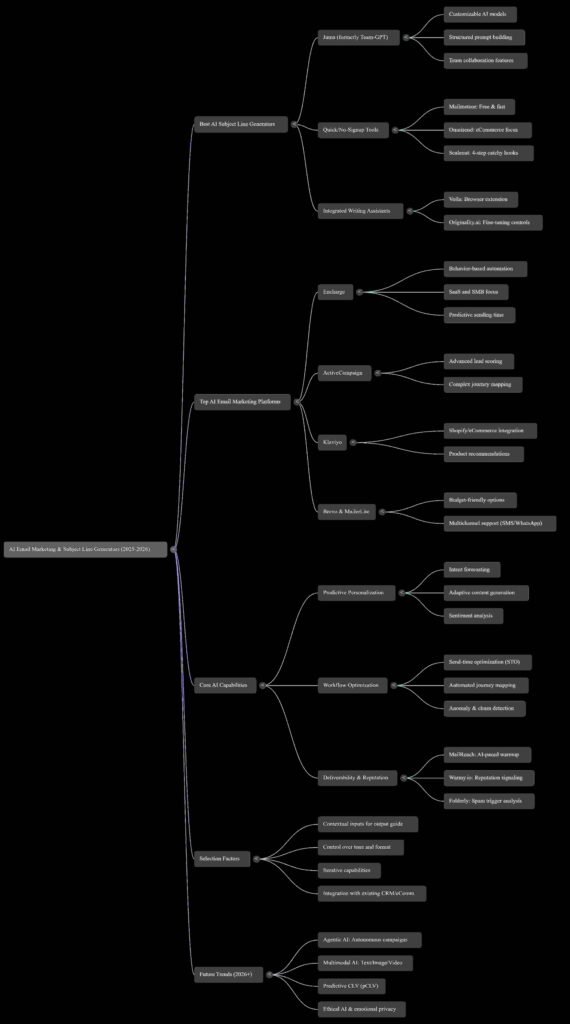
Strategic growth teams now operate via the Predictive AI Stack, a four-layer technical framework that grounds sentience in data:
- Behavioral Layer: Tracks subscriber patterns and sentiment across devices.
- Predictive Layer: Forecasts upcoming user needs and specific engagement windows.
- Generative Layer: Creates the adaptive copy and tone variations in real-time.
- Optimization Layer: Automatically evolves campaigns based on live performance loops.
This architecture transforms the inbox into a “relationship interface” that feels instinctive rather than scheduled.
“The best emails in 2026 don’t wait for engagement. They arrive when empathy meets prediction.”
3. Adaptive Content: The Email That Rewrites Itself
The “Generative Layer” of the modern email stack has rendered static templates obsolete. Content is now fluid, using generative engines to adjust copy, tone, and visual design “mid-flight” based on the ongoing evolution of a user’s profile and mood.
By 2026, a single campaign can manifest in thousands of variations to achieve psychological alignment with the reader. For instance:
- High-Value/Engaged Subscribers: Receive confident, data-rich copy focused on deepening the existing relationship.
- New Subscribers: Receive an empathetic, welcoming tone designed to build foundational trust.
- Low-Activity Subscribers: Receive curiosity-driven storytelling to reignite interest and trigger reactivation.
This moves the needle far beyond “name in the subject line” personalization, aligning the brand’s narrative with the recipient’s current psychological state.
4. Smart Timing: Finding the “Emotional Window”
Traditional Send Time Optimization (STO), which relied on basic time zones, has evolved into “Predictive Moment Marketing.” AI systems now factor in “emotional readiness” to determine the perfect send moment, factoring in environmental signals like local weather, seasonality, and device usage rhythms.
We no longer measure success by simple opens alone. Top-tier strategists now track the Predictive Open Rate (POR)—the percentage of accurately forecasted engagement windows—and the Adaptive Conversion Index (ACI), which measures how real-time content shifts actually drive movement. This transition from “hustle” to “harmony” tones based on the subscriber’s current context has demonstrated a 38% lift in open rates and a significant boost in click-to-purchase conversions.
5. The 90% Efficiency Leap: Turning Days into Minutes
The integration of generative AI has compressed the campaign production cycle into a fraction of its former self. In 2024, the majority of marketing teams required weeks to move a campaign from concept to launch. In 2026, that timeline is measured in minutes.
| Metric | Email Creation 2024 | Email Creation 2026 |
| Production Speed | 62% of teams took >2 weeks | Only 6% of teams take >2 weeks |
| Revenue Generation | Baseline performance | 41% revenue lift (AI-powered) |
| Click-Through Rate | Static performance | 13% average CTR increase |
| Efficiency Goal | Manual drafting & design | 90% reduction in production time |
Modern marketers leverage specialized tools like Juma (formerly Team-GPT) to build structured, collaborative prompts that ensure brand alignment across the team. Simultaneously, platforms like Encharge provide behavior-based flows that use real user data to “do the thinking for you,” automating the entire path from sign-up to conversion.
Strategist’s Pro-Tip: Move your team away from “prompting in a vacuum.” Use collaborative platforms like Juma to build a shared library of brand-aligned prompts that can be refined based on ACI and POR data.
6. Deliverability is No Longer a Human Task
Spam filters have become increasingly ruthless, making deliverability a technical hurdle that requires machine learning to clear. AI deliverability tools, such as MailReach, have moved beyond static sequences to “AI-paced warm-up.” These systems vary timing, subject lines, and reply patterns to mimic human behavior across a network of real business inboxes.
The 2026 “AI Deliverability Stack” includes:
- Real-time Reputation Monitoring: Tracking sender health across major providers.
- Automated Authentication: Continuous verification of SPF, DKIM, and DMARC records.
- Co-Pilot Alerts: Real-time notifications that allow teams to adjust strategies before reputation declines.
Strategist’s Pro-Tip: Audit your current “static” warm-up tools. If they aren’t using adaptive machine learning to mimic human replies and varying timing across a business-only network like MailReach, they are likely leaving footprints that modern ISPs detect as inorganic.
7. The New Marketer: From Campaign Operator to “Story Engineer”
As AI assumes the burden of prediction and optimization, the human marketer has evolved into a “Story Engineer.” While the algorithm handles technical precision, the human focuses on the emotional framework, brand philosophy, and ethical leadership.
| Function | AI Role | Human Role |
| Execution | Forecasts intent; auto-generates copy | Defines brand philosophy and ethics |
| Strategy | Real-time optimization (POR/ACI) | Guides emotional narratives and nuance |
| Trust | Ensures technical deliverability | Honors the human relationship |
“AI can predict emotion. Only humans can honor it.”
8. Conclusion: Beyond the Algorithm
By 2026, email has matured into a self-learning relationship engine. It is no longer a channel for noise, but a sophisticated system that understands not just who a subscriber is, but who they are becoming.
As we move forward, trust has become the new open rate. The challenge for modern leaders is balancing the precision of predictive AI with the necessity of privacy and integrity. The brands that win the inbox are those that use technology to become more human, not less. How will you balance this predictive precision with the trust of your audience in your own strategy?
Discover more from TechResider Submit AI Tool
Subscribe to get the latest posts sent to your email.